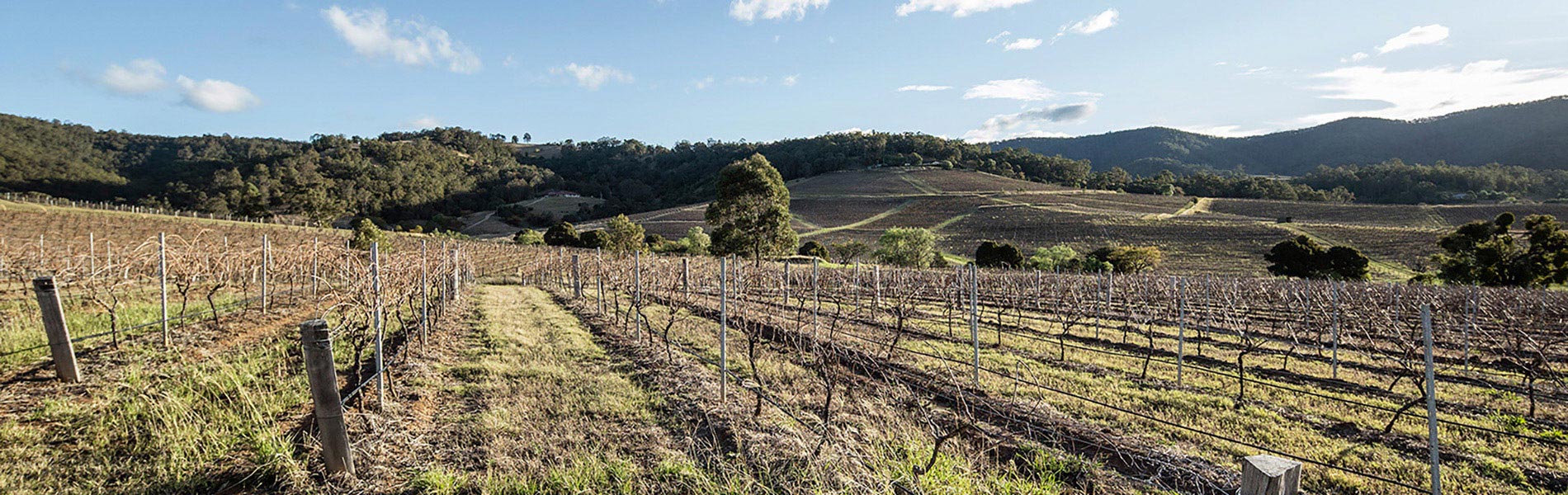
Australians are increasingly seeking experiences that bring together food, connection and discovery, and local wine is uniquely placed to be part of those moments.
Wine Australia research shows consumers are placing greater value on memorable, sensory-rich and socially shareable experiences. The setting, aesthetics and opportunity to connect with others are becoming just as important as the drink itself.
Australian wine exports declined by 7 per cent in value to $2.30 billion and 6 per cent in volume to 598 million litres in the year ended June 2026, according to Wine Australia’s Export Report released today.
Wine Australia and Vinehealth Australia are co-investing to modernise South Australia’s Vinehealth Vineyard Register and align it with the National Vineyard Register.
Australia’s 2026 winegrape crush fell to 1.27 million tonnes – its smallest since 2000 – but the reduced national crop did not result in stronger grape prices according to Wine Australia’s National Vintage Report 2026 released today.
Some of the UK and Ireland’s most influential wine buyers and sommeliers will visit Australia this November as part of a Wine Australia initiative designed to deepen market understanding and build long-term advocacy for Australian wine.
Continuing its ongoing efforts to promote the many career pathways in the grape and wine sector to the next generation, Wine Australia recently connected with students at two Adelaide high schools through two career-focused activations
A modest, redeveloped vineyard at a high school in Sydney’s Northern Beaches will soon be an unlikely home to disease-resistant grapevines that have been developed by CSIRO, Australia’s national science agency, in a long-running breeding program supported by Wine Australia.
The potential of a novel processing approach to deliver reduced-alcohol wines without compromising quality is being explored as part of project being led by Australia’s national science agency CSIRO.
From 28 April - 7 May, Wine Australia’s North America Roadshow travelled to Minneapolis, Boston, Nashville and Vancouver. The 'Rediscover Australia' Roadshow was designed to showcase how Australian wine meets trade expectations and consumer preferences in a highly competitive and challenging market.
What do Arinto, Assyrtiko and Aglianico have in common? They are grape varieties recently imported into Australia and are appearing more and more on Australian wine labels. In Australia, the name used for a grape variety on a wine label must be recognised by at least one of three organisations.
The Australian market is the ninth-largest and eighth-most attractive wine market in the world, according to the IWSR . It is the Australian wine industry’s largest single market, accounting for 40 per cent of total sales, and also our most accessible – with (needless to say) no tariffs, no freight costs and no language barriers. While the Australian wine market has not been immune to the declines affecting mature wine markets globally, it has proved comparatively resilient. Beneath the headline decline, the data reveals a number of positive growth stories across specific wine styles, price segments and regions.
Australian wine exports declined in the year ended June 2026, reflecting ongoing weakness in global wine consumption and increasingly challenging conditions across many of Australia’s key export markets.
The 2026 vintage was the smallest in over 25 years at 1.27 million tonnes, according to Wine Australia’s National Vintage Report 2026 released today. While adverse seasonal conditions affected production in several regions, the scale and pattern of the decline suggest that market factors were the primary driver. This market bulletin looks at how the composition of the Australian winegrape crush in 2026 reflects changing conditions and examines the impact on grape prices.
Thailand is one of Southeast Asia’s most promising emerging wine markets, with steady consumption growth and strong demand for imported wine. The country is the third largest economy and largest wine market in the region. Australian wine is highly regarded for quality, trust and sustainability, creating a strong position for further growth.
This Market Bulletin provides a snapshot of the key market trends from Wine Australia’s newly published Thailand Market Insight Report. For more detailed analysis, Australian wine levy-payers and exporters can access the full report on our website.
Global wine consumption continues to decline, but not equally across markets, with new data from IWSR revealing a decline in both volume and value in 2025.
The latest wine consumption figures show a global decline of 3.2 billion litres since 2020, a rate of 3 per cent per year on average. While the value of wine consumption has grown by an average of 1 per cent per year since 2020, value also declined slightly in the past year, for the first time since the COVID-19 pandemic.